
Accident insurance vs life insurance can sound like a choice between products. In reality, they solve different financial problems. Accident coverage usually pays set benefits after qualifying injuries. Life coverage mainly protects beneficiaries when the insured person dies from a covered cause.
This difference matters when protecting medical costs, income, debts, and family responsibilities. A low premium can be appealing, but narrow coverage may leave a serious gap.
This guide explains both policies, their limits, and how Self Empowered Financing & Consulting, LLC. can help you compare them.
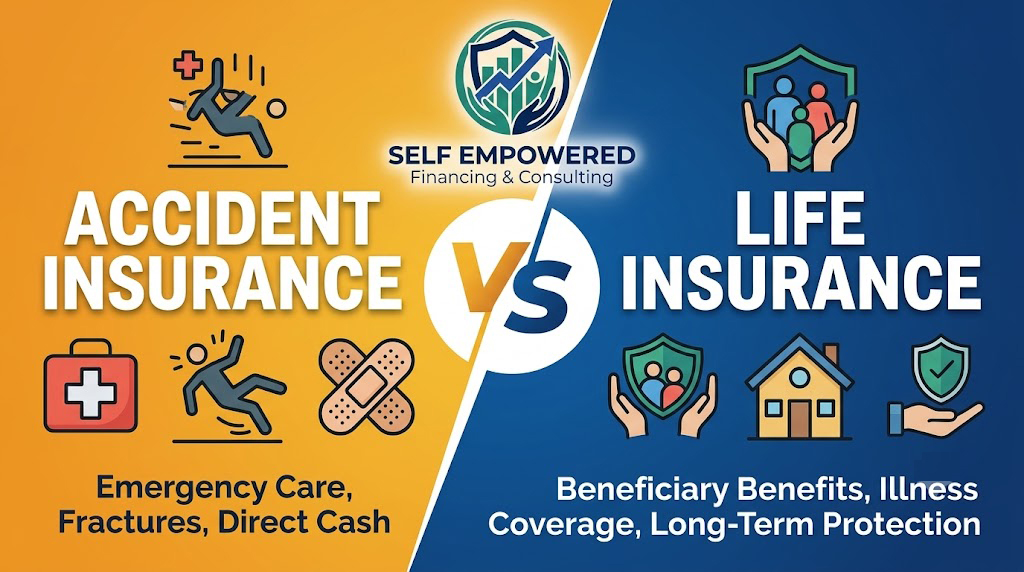
Accident Insurance vs Life Insurance: Core Differences
The fastest way to understand accident insurance vs life insurance is to identify the event that triggers payment. Accident insurance generally responds to a qualifying accidental injury. Life insurance generally pays a death benefit to named beneficiaries after a covered death.
Accident only coverage may provide scheduled cash benefits for fractures, emergency treatment, hospital stays, disability, dismemberment, or accidental death. The exact payment depends on the policy schedule, not necessarily on the full bill.
Life insurance addresses the financial effect of death. Beneficiaries may use proceeds for living costs, a mortgage, education, final expenses, business needs, or other priorities.
Core Coverage Comparison
| Feature | Accident Insurance | Life Insurance |
|---|---|---|
| Main purpose | Provides cash after specified accidental injuries or losses. | Provides a death benefit to named beneficiaries. |
| Payment trigger | A covered accident and listed medical event or loss. | The insured person's covered death. |
| Illness coverage | Usually does not pay when illness alone causes the event. | Generally covers death from illness, subject to the contract. |
| Benefit amount | Often follows a schedule for each injury or service. | Usually pays the policy death benefit. |
| Cash value | Typically none. | Available in some permanent policies. |
| Primary role | Supplemental help with accident related costs. | Family income and legacy protection. |
How Accident Insurance Works
Accident insurance is usually supplemental coverage. It can sit beside health insurance and provide cash directly to the policyholder after a covered injury. People may use the money for deductibles, transportation, childcare, household bills, or other expenses during recovery.
Policies may list separate payments for emergency care, fractures, surgery, hospital stays, or therapy. Some also include accidental death and dismemberment benefits.
Important: Accident insurance does not replace comprehensive health coverage. Fixed benefits may be lower than actual costs, and exclusions can apply to certain activities, illegal acts, or events outside the contract.
When reviewing accident insurance vs life insurance, remember that accident coverage protects against a narrow cause. A serious illness, natural death, or many long term health needs may not trigger any accident benefit.
How Life Insurance Works
Life insurance is a contract designed to pay named beneficiaries after the insured person's covered death. Term life provides protection for a chosen period. Whole life and other permanent policies can remain in force for life when required premiums and policy conditions are met.
Term insurance offers temporary protection and usually has no cash value. Permanent coverage generally costs more because it may combine lifelong protection with contractual value features.
Underwriting may consider age, health, tobacco use, medical history, occupation, driving history, and requested coverage. Some products use simplified or accelerated review.
The key advantage in accident insurance vs life insurance is broader cause of death protection. A standard life policy may cover death from illness as well as accidents, unless an exclusion or other contract provision applies.
Costs in Accident Insurance vs Life Insurance
Accident plans may cost less because benefits apply only to covered accidental events. Employer plans often use simple enrollment with limited health questions.
Life insurance pricing reflects expected mortality risk and policy design. Health, age, tobacco use, occupation, and coverage amount can affect the premium.
Accident claims may require medical records, bills, or an accident report. Life claims usually require a claim form, death certificate, and sometimes additional investigation.
Which Policy Helps in Common Situations?
| Situation | Accident Insurance Response | Life Insurance Response |
|---|---|---|
| Broken arm after a fall | May pay scheduled injury and treatment benefits. | Usually no living benefit unless a rider applies. |
| Hospital stay after an accident | May pay admission or daily hospital amounts. | Usually no standard payment while the insured lives. |
| Death from a covered accident | May pay an accidental death amount. | May pay the full death benefit. |
| Death from cancer | Usually no benefit because the cause is illness. | Generally covered, subject to policy terms. |
| Need for lifelong protection | Not designed for broad lifelong death protection. | Permanent insurance may meet this goal. |
| Temporary income protection | May provide limited cash after listed injuries. | Death benefit protects survivors, not routine injury income. |
Do You Need Accident Insurance?
Accident coverage may help when a high deductible, limited savings, or family expenses make an injury financially disruptive. Cash benefits can support bills during recovery.
Compare the benefit schedule with your risks. Review annual limits, exclusions, covered services, and whether employer coverage ends when you leave the job.
Consider these questions:
- How large is your health insurance deductible and out of pocket exposure?
- Could you cover transportation, childcare, or missed work after an injury?
- Which injuries and treatments appear on the benefit schedule?
- Are sports, work activities, travel, or other risks excluded?
- Would an emergency fund provide more flexible protection?
Do You Need Life Insurance?
Life coverage matters when another person would face hardship after your death. Common needs include income replacement, mortgage protection, education, final expenses, caregiving, and business obligations.
Estimate the amount your household would need, subtract savings and existing coverage, then review the gap. Employer coverage may be limited or lost after a job change.
For buyers comparing accident insurance vs life insurance, the central question is not which policy sounds simpler. It is whether your family needs support after death, whether you need injury related cash while living, or whether both needs exist.
Can You Use Both Types of Coverage?
Yes. The policies can work together because they address different risks. Life coverage protects beneficiaries, while an accident plan may help with injury related expenses.
Each insurer evaluates claims under its own contract. A covered accidental death might trigger both policies, while death from illness may trigger only the life policy.
The right combination depends on your budget, health plan, savings, dependents, work benefits, and goals. Do not treat a small accidental death benefit as complete life protection.
Common Buying Mistakes to Avoid
A common mistake is choosing accident coverage only because enrollment is easy. Easy purchase does not mean broad protection, and not every injury or death qualifies.
Employer benefits may also change or end after a job transition. Check portability, continuation rights, and the premium required to keep coverage.
Avoid these errors:
- Comparing premiums without comparing benefit triggers.
- Confusing accident insurance with comprehensive health insurance.
- Assuming accidental death coverage replaces standard life insurance.
- Ignoring exclusions, limits, waiting rules, and claim deadlines.
- Buying coverage without updating beneficiaries or household records.
- Keeping duplicate policies that no longer match your needs.
Choosing Accident Insurance vs Life Insurance
Start with the financial problem. Accident coverage may help with immediate injury costs. Life insurance deserves priority when death would remove income or leave debts.
Compare contracts, not marketing labels. Read covered events, exclusions, premiums, renewal terms, benefit schedules, riders, and claim requirements.
A practical accident insurance vs life insurance review should include emergency savings. Cash handles flexible short term needs, while insurance transfers larger risks.
How Self Empowered Financing & Consulting, LLC. Can Help
Self Empowered Financing & Consulting, LLC. connects coverage decisions with real goals. A review considers dependents, income, debts, savings, existing benefits, and budget.
For permanent protection and legacy planning, explore our whole life insurance solutions. A review can clarify whether lifelong coverage fits your goals.
Clear advice should explain advantages and limits without pressuring you to buy because enrollment is easy or the premium looks low.
Frequently Asked Questions
Is Accident Insurance the Same as Accidental Death Insurance?
Not always. Accident insurance may pay for listed injuries, treatment, disability, dismemberment, or accidental death. Accidental death coverage focuses mainly on death caused by a qualifying accident.
Does Life Insurance Cover Accidental Death?
Generally, yes. A standard life policy can cover accidental death and death from illness, subject to exclusions and policy terms. A rider may add another accidental death benefit.
Which Is More Important for a Family?
Life insurance is usually more important when dependents rely on the insured person's income or services. Accident insurance can complement it, but narrower triggers make it an incomplete replacement.
Conclusion
Accident insurance vs life insurance is not a contest with one universal winner. Accident coverage can help with specified injury related expenses. Life coverage protects beneficiaries after a covered death and can address much larger family obligations.
Choose according to the loss you need to manage. Compare exclusions, benefits, duration, premiums, and existing protection. A low cost accident plan is not equal to complete life coverage.
Self Empowered Financing & Consulting, LLC. can help you review gaps and prioritize accident insurance vs life insurance. Schedule a personalized insurance consultation to discuss your family, budget, and goals.